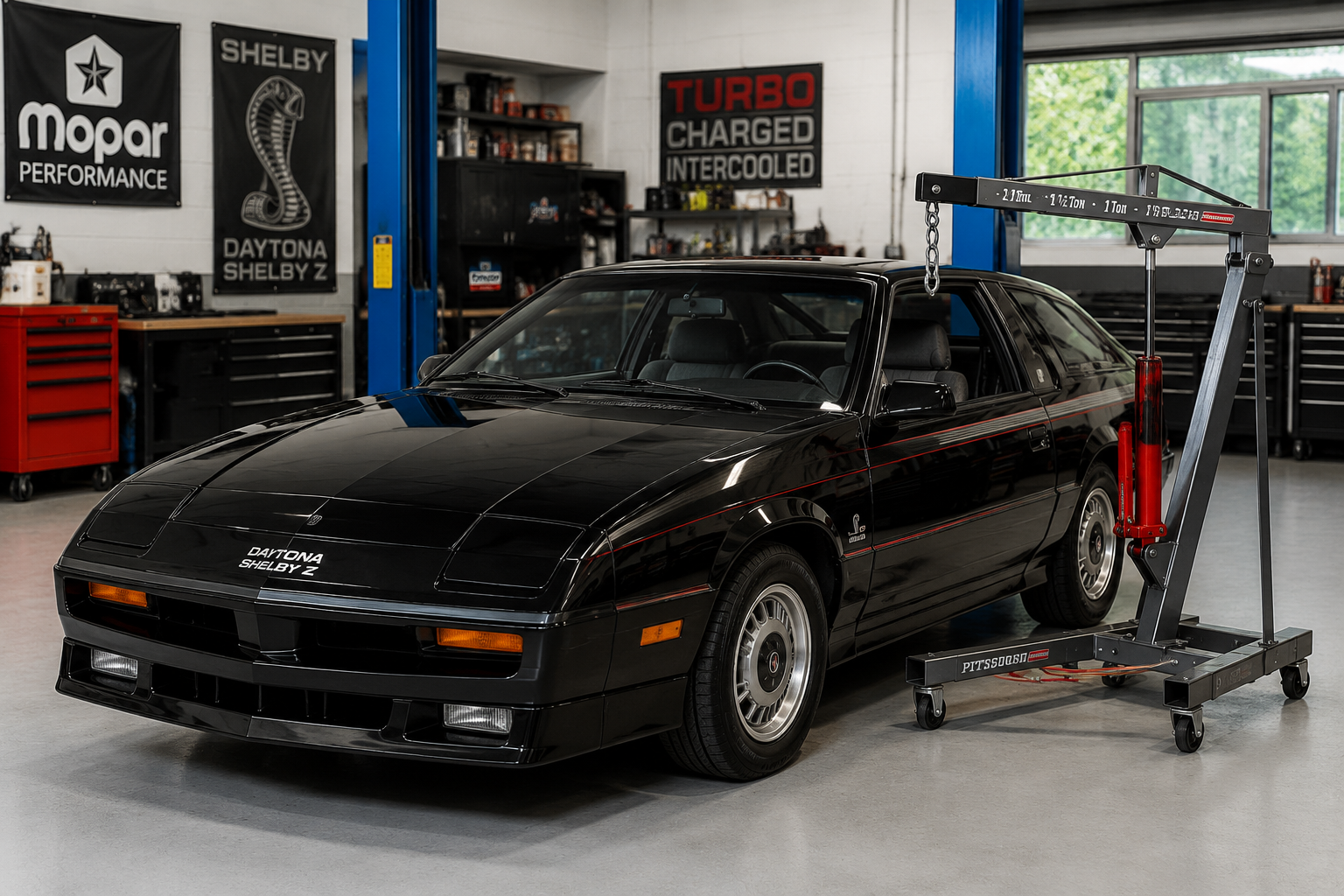
What if the supposed unreliability of your Shelby Z is actually just a collection of 40-year-old factory compromises? It is frustrating when you are hunting for discontinued OEM Chrysler parts or struggling with a 2.2L Turbo II that refuses to keep its head gasket intact. Addressing these dodge daytona shelby z problems is part of the enthusiast experience, but it does not have to be a guessing game. Most of these issues stem from aging vacuum lines and sensors that modern, specialized components can finally fix for good.
You likely want that crisp, modern shifting feel and a Turbo II engine that stays cool even under heavy boost. We understand that passion because we live it every day in the shop. This guide will help you identify and resolve the most common mechanical failures with expert advice and specialized part solutions. Whether you are a long-time restorer or a new owner, you deserve a car that performs as well as it looks.
We will walk through everything from fixing sloppy G-body shifting to sourcing the right 782 cylinder heads. You will learn how a professional A525 to A555 transmission swap can transform your driving experience. We are going to cover the exact steps needed to build a reliable engine and a stable drivetrain that can handle the heat.
Many dodge daytona shelby z problems start under the hood with the 2.2L Turbo II powerplant. This engine is a masterpiece of 1980s engineering, but it has specific weaknesses that every owner eventually faces. The most common point of failure is the 782 "Swirl" head casting. These heads are notorious for developing hairline cracks between the intake and exhaust valves. This happens because the "Fast Burn" design creates localized heat stress that the original aluminum casting struggles to dissipate over hundreds of heat cycles. If you see mystery coolant loss without a visible leak, your head might be compromised.
Understanding your engine's foundation is vital for a proper build. When looking back at Dodge Daytona history, the late 1986 introduction of the Shelby Z marked a major shift in performance. You need to know if you're working with a true Turbo II (T2) block or a converted Turbo I (T1). A genuine T2 block features a forged steel crankshaft and heavy-duty "floating pin" connecting rods designed for higher boost. The T1 blocks used cast cranks and press-fit pins, which don't hold up as well when you start pushing past factory power levels.
Head gasket failure is almost a rite of passage for Shelby owners. You'll usually see symptoms like the "chocolate milkshake" oil in your coolant or external weeping down the back of the engine block. Don't waste your time with New Old Stock (NOS) gaskets. The adhesive on these 40-year-old parts is often brittle and fails immediately under pressure. Instead, use a modern Fel-Pro PermaTorque , a metal/composite hybrid like our "Metalmix" gasket or a multi-layer steel (MLS) or Cometic copper gasket. If you plan on running more than 12 psi of boost, ARP head studs or ARP head bolts are mandatory to prevent the head from lifting. The 782 head casting is the preferred choice for 1987-1993 restorations because it offers the best combustion chamber efficiency for the Turbo II setup.
That annoying "tick-tick-tick" at idle is a classic dodge daytona shelby z problems indicator. It's often a collapsed hydraulic lifter. You can distinguish this from rod knock because lifter noise is a lighter tapping sound that happens at half-engine speed and stays at the top of the head. The permanent fix is the Turbo Dodge Parts "PT Lifter" upgrade. This involves using lifters from the 2.4L Chrysler engine paired with specific shims to match the 2.2L geometry. It's a "must-do" modification whenever you have the valve cover off. If your current casting is cracked or warped beyond repair, we provide fully machined Turbo Dodge 782 cylinder heads that are ready to bolt on and perform.
Shifting issues are among the most common dodge daytona shelby z problems. If you've ever tried to find third gear under boost and felt like you were stirring a bowl of soup, you know the struggle. The early A525 manual transmissions were never meant for the high-torque output of the Turbo II engine. They often suffer from gear syncro failures and internal structural weakness. In contrast, the A555 Getrag-designed unit is a tank. It was built specifically for the 1987-1989 Shelby Z to handle the 174 horsepower and 200 lb-ft of torque. While checking for factory defects via NHTSA safety recalls is good practice, most shifting woes are simply due to 40 years of wear on soft plastic components and worn out shift cables or deteriorated shift cable bushings.
Syncro failures in the A525 usually manifest as grinding during high-RPM shifts into second or third gear. This happens when the brass rings wear down until they can no longer synchronize gear speeds effectively. The A555 uses much beefier internal components to prevent this. Even with a strong transmission, the linkage remains a primary failure point. Worn shifter cable bushings are the top cause of missed shifts and poor driver feedback. If you want to eliminate dodge daytona shelby z problems related to vague gear selection, upgrading the shift cable end bushings with replacement "poly" bushings commonly available for the Dodge Neon 5 speed cars is the most cost-effective solution you can perform in your driveway. Original replacement cables for any turbo Dodge car are getting increasingly harder to find, especially the selector cable that is prone to becoming stiff due to it's design.
The A555 swap is the gold standard for durability in any high-horsepower Daytona build. It features a different gear ratios and a stronger gear set that is much better suited for turbocharging. You can identify a genuine A555 by the round build tag that is located on the top of the transmission near the selector shaft housing. If the tag is missing, the experienced eye can identify one by removing the selector shaft housing and actually visually inspecting the gear sets. Swapping the A555 or is cousin A520 into an an L-body requires specific hardware to align the shifter hardware correctly. You need specialized L body A525 to A555 conversion brackets to ensure a seamless fit. This swap ensures your drivetrain can actually survive the power your Turbo II is making without shearing gears.
Intermittent stalling and violent bucking are the most common dodge daytona shelby z problems that leave owners scratching their heads. Unlike modern cars with advanced diagnostics, these Turbo II machines rely on a few critical sensors and a complex vacuum network to stay running. If your car suddenly dies at a stoplight but restarts after it cools down, you aren't dealing with a mystery. You are likely dealing with a failing Hall Effect Pickup (HEP). This sensor is the heartbeat of your ignition system. When it fails, the logic module loses track of engine position and cuts fuel and spark immediately.
Beyond the sensors, the fuel system on these 1980s legends can be temperamental. Enthusiasts often rush to replace the fuel pump when the car won't start, but the fuel pump relay is frequently the real culprit. Corroded pins or heat-damaged internal components in the relay can prevent the pump from priming. Additionally, the logic module (ECU) is programmed to be highly protective. If it detects "phantom" knock caused by a loose bracket or a noisy valvetrain, it will aggressively pull timing. This results in a jarring, bucking sensation that feels like a mechanical failure but is actually a software-driven safety response.
The HEP is located inside the distributor and consists of two separate circuits. You can test it with a basic multimeter by checking for a 5-volt reference signal while cranking the engine. Heat soak is the primary enemy of the HEP; as the engine bay temperatures rise, the internal wiring in the sensor expands and breaks contact. This is why your Shelby Z might run perfectly for twenty minutes and then die without warning. Don't settle for generic auto parts store replacements. These cars are sensitive to signal noise, so high-quality sensors are required for a reliable fix.
The factory vacuum line "rats nest" is a major source of dodge daytona shelby z problems. After four decades, the original plastic lines are brittle and prone to cracking. A single leak can ruin your idle or, worse, lead to a dangerous lean condition under boost. We recommend replacing the entire network with silicone lines or custom hardlines. While you are in there, locate the wastegate actuator and check the diaphragm for tears. If the actuator can't hold vacuum, you'll experience erratic boost levels that can quickly lead to the head gasket failures we discussed in previous sections.
A properly sealed vacuum system ensures the MAP sensor receives an accurate signal. This allows the logic module to provide the correct fuel enrichment when the turbo spools. If you want a stable idle and consistent power delivery, a total vacuum overhaul is not optional; it is a necessity for any Turbo II build.
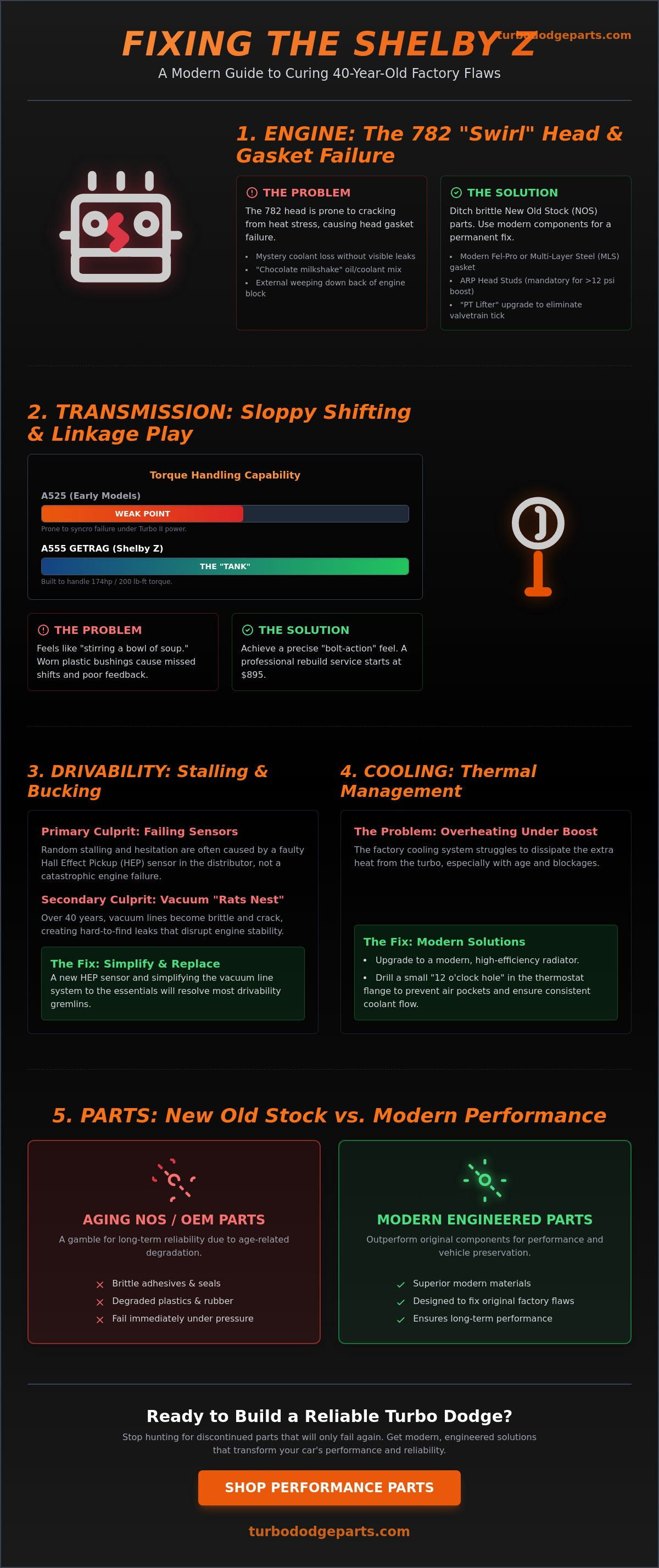
The Shelby Z is a heat-generating machine. While the Turbo II engine produces impressive power, the factory cooling system was barely adequate when new. Now, with 40 years of scale and debris buildup, cooling issues are a primary source of dodge daytona shelby z problems. The cramped engine bay of the intercooled models restricts airflow significantly compared to the non-intercooled versions. If your temperature gauge climbs past the midway point during a boost pull, you are risking the structural integrity of the engine. Thermal shock is the silent killer of the 2.2L block. Rapidly fluctuating temperatures cause the aluminum head to expand and contract unevenly, which leads directly to the valve seat cracks mentioned in our earlier section.
One essential enthusiast trick is the "12 o’clock hole" modification. You drill a small 1/16-inch hole at the top of the thermostat flange before installation. This allows trapped air to bleed out of the block during a coolant refill. It also provides a tiny amount of constant flow to prevent hot spots from forming before the thermostat fully opens. Additionally, don't overlook your radiator cap. A weak spring that fails to hold the required 16 psi will lower the boiling point of your coolant. This leads to localized boiling inside the head passages, even if the dashboard gauge appears normal. Many new caps from big-box retailers are defective out of the box, so pressure testing your cap is a vital troubleshooting step.
Selecting the right thermostat is critical for engine longevity. Stick with a 192 or 195 F unit for peak efficiency. Many owners mistakenly install a 160 F thermostat thinking "cooler is better," but this is a mistake. The Turbo II logic module needs to see at least 180 degrees to stay out of "cold start" enrichment mode. Running too cool leads to poor fuel economy and excessive carbon buildup on the valves. Using low-quality thermostats in intercooled models risks a sudden stuck-closed failure that can warp an expensive aluminum head in under 60 seconds of high-boost driving.
Maintain a strict 50/50 coolant ratio using distilled water. Using tap water or incorrect antifreeze mixtures promotes electrolysis, which eats away at the aluminum head from the inside out. In heavy city driving, the factory electric fan switch is often the weak link. The stock unit doesn't trigger the fan until temperatures reach roughly 220 F. Upgrading to a lower-temp fan switch that kicks in at 200 F provides a much-needed safety margin. If your cooling system failure has already caused internal damage, we can help you recover with our Turbo Dodge rebuilt engines that are built to handle modern driving demands.
Hunting for Shelby-only interior trim or mechanical components can feel like an impossible task. Most local parts stores stopped stocking these items decades ago. Scavenging through junkyards is a gamble that rarely pays off today. You often find picked-over shells or components that are in worse shape than what you're replacing. These dodge daytona shelby z problems require a more strategic approach than just browsing eBay. You need mechanical parts that are engineered to last another 40 years without the "scavenger hunt" frustration.
New Old Stock (NOS) parts are a popular choice for purists, but they come with hidden risks. Rubber seals, plastic bushings, and gasket materials degrade over time even when sitting in a box. A 40-year-old NOS head gasket or shift bushing might look perfect but fail the moment it sees heat and pressure. Custom-manufactured parts solve this by using modern materials that exceed the original Chrysler specifications. Investing in a professional rebuild rather than a junkyard core provides a much better return on your restoration budget. It ensures your Turbo II stays reliable for the long haul.
We specialize exclusively in the Chrysler 2.2L and 2.5L engine platforms. This focus allows us to develop custom-engineered solutions for common dodge daytona shelby z problems that general retailers ignore. Whether you need hard parts or good solid advice we have the hardware and experience ready. You get direct access to an owner-operator who lived through the Shelby Dodge era and understands these cars inside and out. We don't just sell parts; we provide the technical support needed to ensure they are installed correctly.
Restoring a Shelby Z shouldn't be a source of constant stress. You can order custom rebuilt engines and 782 heads directly through our shop to save months of searching and machine shop delays. If you have a specific restoration need that isn't listed in our main catalog, our "Customer Reserved" service allows for personalized sourcing and one-on-one interaction. We are dedicated to keeping these front-wheel-drive legends on the pavement where they belong. Browse our full inventory of Turbo Dodge performance parts today!
Solving dodge daytona shelby z problems is about moving past 40-year-old factory compromises. You now have the knowledge to fix that sloppy shifter and protect your 782 swirl head from the dangers of thermal shock. By proactively addressing the HEP sensor and the brittle vacuum network, you ensure your Turbo II engine stays reliable even under heavy boost. Don't let discontinued parts or vague forum advice stall your restoration project. You deserve a car that shifts with precision and maintains stable temperatures in heavy traffic.
We are dedicated to the preservation of these front-wheel-drive legends. Our shop specializes exclusively in the 2.2L and 2.5L Chrysler platforms. We offer custom manufactured shift rods, conversion brackets, and fully machined heads designed for enthusiasts by enthusiasts. You get direct support from an expert who knows these cars inside and out. Your Daytona is a piece of automotive history. Restore your Shelby Z with expert parts from Turbo Dodge Parts today! We are here to help you get back in the driver's seat with confidence.
Bucking is usually caused by the logic module pulling timing due to detected knock or a failing Hall Effect Pickup (HEP) sensor. When the computer receives a noisy signal from an aging sensor, it cuts spark immediately to protect the engine from perceived damage. You should check your knock sensor mounting and ensure your distributor components are clean and secure. This jarring sensation often feels like a mechanical failure but is typically an electronic safety response.
You can swap an A555 into earlier models as long as you have the correct conversion components. The A555 case has different mounting points than the weaker A525 units found in pre-1987 cars, most importantly the torque strut and the transmission end of the axles are different as well as the shift cables, shifter and shifter cable mounting brackets. This swap is the best way to ensure your drivetrain survives the high torque of a Turbo II engine build.
A modern Fel-Pro PermaTorque, our 'Metalmix hybrid metal/composite gasket or a multi-layer steel (MLS) or copper Cometic gasket is the best choice for these engines. These modern options use superior sealing compounds compared to the original factory stock from the 1980s. For high-boost applications exceeding 14 psi, an MLS gasket provides the most reliable protection against failure. Always pair these with new head bolts or stronger ARP head studs/bolts to maintain a consistent seal under extreme combustion pressures.
Sloppy shifting is corrected by replacing the factory plastic bushings with high-quality poly shift cable bushings made for the Dodge Neon. These poly bushings eliminate the vague feel. This upgrade provides a firmer connection that restores a more precise feel to your gear selection. It is a simple driveway fix that significantly improves the daily driving experience of any G-body car.
The 782 head is the preferred choice for 1987-1989 restorations because its "fast burn" chambers improve low-end torque and efficiency. While earlier "Bathtub" heads offer better absolute airflow for dedicated racing applications, the 782 is much better for street-driven Turbo II builds. The swirl design promotes better fuel mixing, which helps prevent detonation during part-throttle boost conditions common in daily driving.
Finding a reliable dodge daytona shelby z problems solution often leads owners to look for specialized engine builds from expert vendors. We offer fully rebuilt 2.2L and 2.5L engines that are machined to tighter tolerances than the original 1980s factory units. This ensures your restoration has a solid mechanical foundation. Our builds use modern components to address the oiling and cooling weaknesses found in original high-mileage blocks.
A flashing light indicates the logic module has detected a sensor out of range and stored a fault code. You can read these codes without a scanner by cycling the ignition key from "Off" to "On" three times. Code 11 often points to an ignition signal issue, while Code 12 indicates the battery was recently disconnected. Knowing these codes allows you to pinpoint sensor failures before they leave you stranded.
Stock fuel injectors are perfectly adequate if you are keeping the car at factory boost levels. These 33 lb/hr units provide enough fuel flow for the 174 horsepower Turbo II engine without running lean. However, if your car has been sitting for 10 years, these injectors should be professionally cleaned and flow-tested. Replacing them with modern equivalents can improve idle quality and throttle response even on a completely stock build.